
California · AI Content
AI Content Services in California
California invented most of the AI now flooding the internet with content, which is exactly why undifferentiated AI content no longer moves anything here. The advantage has shifted. It belongs to the brands that use AI to scale a real strategy, keep human judgment in charge of what matters, and build content that search and AI answer engines actually cite. That is the system this service builds.
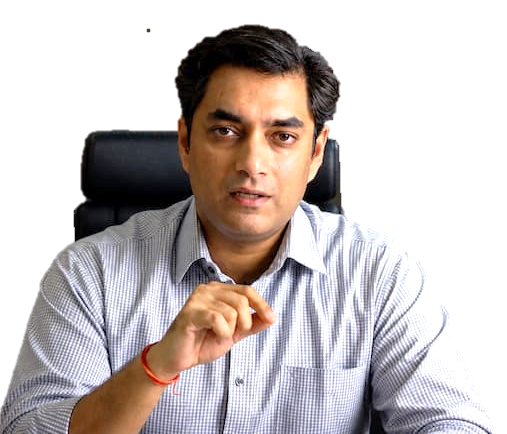
The failure mode is not using AI. It is outsourcing judgment to it.
AI scales content. It does not decide what is worth scaling. The brands losing right now are the ones that handed the strategy to the model: faster armchair thinking, published at volume, indistinguishable from a thousand competitors doing the same. Faster armchair thinking is still armchair thinking. The model can draft. It cannot interview your sales team, read the market’s context, or know which claim will land with your buyer and which will ring hollow.
I have used AI as a practitioner since before it was standard, to move faster without lowering the ceiling. The line I hold is the one that matters: the machine handles what a machine should handle, and a strategist decides what a strategist must decide. On a SaaS platform, a content system built that way grew through Google core updates that punished mass-generated content elsewhere. That is the whole difference. AI as an engine, not as a replacement for the judgment that makes content worth reading.
The brands that win are not the ones using AI or avoiding it. They know the difference between what a machine should write and what a strategist must decide.
AI content, applied to the three California markets that reward it
Each market needs AI used differently: one for scale, one for reach into new answer surfaces, one where accuracy is not optional. The system is set per market, never one setting for all three.
What the AI content service covers
An AI-integrated system with human judgment built into every decision point. Speed where speed helps, a strategist where it counts.
AI-integrated content system
A workflow that uses AI for coverage and speed while keeping topic architecture, positioning, and the quality bar under human control.
Generative engine optimization
Content structured and entity-optimized to be cited by ChatGPT, Perplexity, and Google AI Overviews, not just indexed by classic search.
Editorial governance and fact-checking
The human-in-the-loop layer: claim verification, accuracy control, and a defined line for what AI drafts versus what a strategist decides.
Scalable authority content
Topic-map coverage produced at pace, each piece tied to a real point of view so volume builds authority instead of diluting it.
Entity and knowledge-graph signals
The structured footprint that teaches both search and AI engines what you are the authority on, so you surface when it matters.
Core-update resilience
Content built to strengthen through algorithm updates rather than collapse, the way a SaaS system I ran grew through them.
Who this is the right fit for
This fits a California founder, CMO, or head of marketing who wants the speed AI offers without the flood of forgettable content that usually comes with it. You want scale and authority at once. I build the system that delivers both, with judgment kept where it belongs.
It is a poor fit for anyone who wants raw volume with no strategy behind it, or who treats AI as a way to skip the thinking rather than accelerate it. The relationship is closer to mentor and mentee: you bring the outcome, I direct the system and decide what the machine should never be left to decide alone.
The receipts, not the adjectives
Tell me what you are trying to scale
There is no intake form and no automated sequence. Email the project: the market, the audience, and the outcome you want. You get a considered reply, not a template. If it is a fit on both sides, the next step is a direct conversation. I take on a limited, selected roster, so the reply is honest about whether this is work I can deliver.
rajat.jhingan@gmail.comOr reach out via LinkedIn. Prefer to start broad? Visit the contact page.